Fire on the Headlands
Early coastal warnings relied on elevated fires, local knowledge, and watch stations where dangerous approaches demanded a visible signal.
Historical Overview
This timeline offers a broad interpretive overview, connecting shifts in lighthouse technology with keeper labor and long-term preservation.
Before 1800
Early coastal warnings relied on elevated fires, local knowledge, and watch stations where dangerous approaches demanded a visible signal.
1800–1850
Permanent stone towers and improved lamps created more reliable routes through fog-prone channels and rocky approaches.
1850–1900
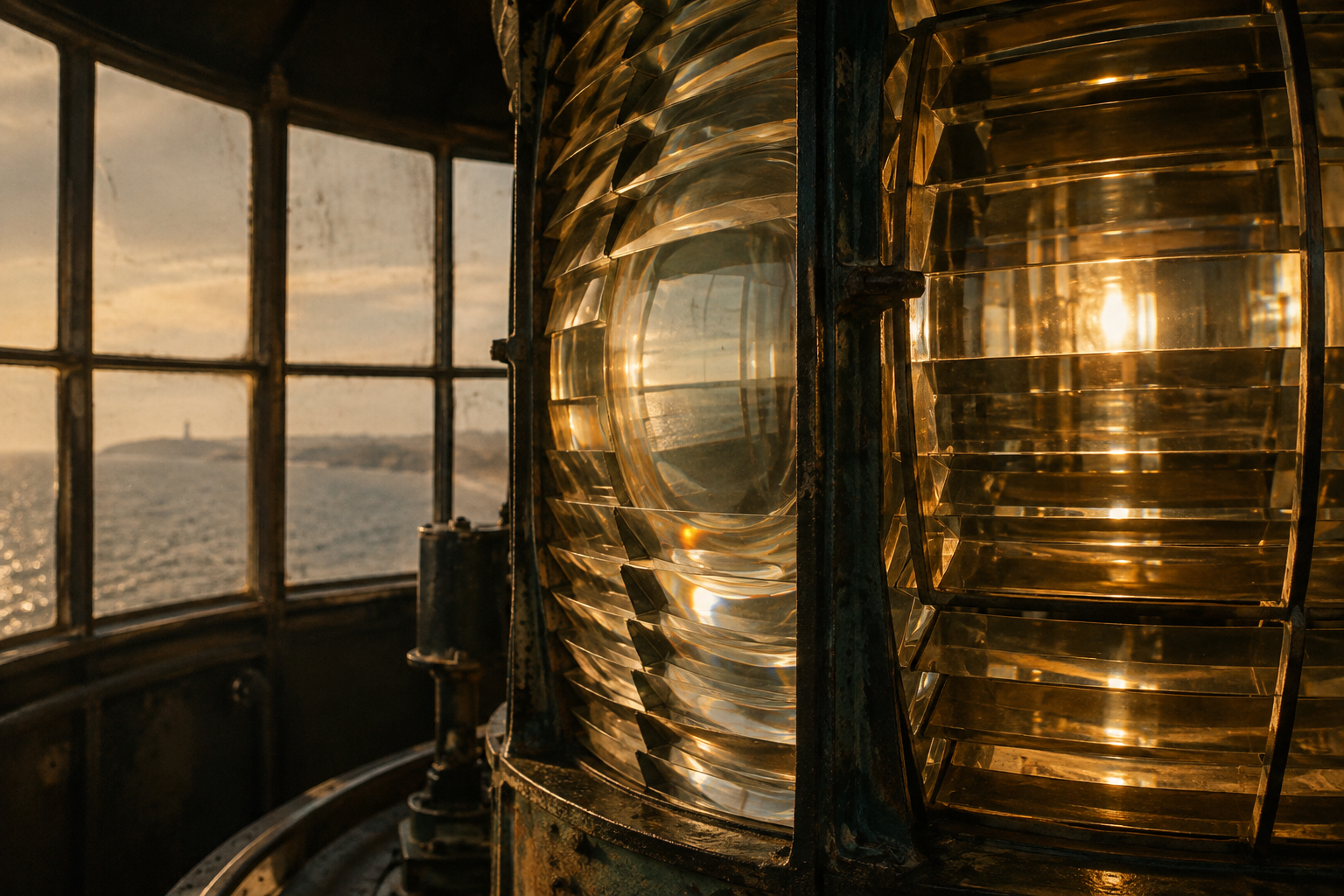
Precision optics concentrated lamplight into distinct beams, while characteristic flashes helped mariners identify each station.
1900–1950
Mechanization changed daily work as fog signals, radio equipment, and wartime duties expanded the station’s role.
After 1950
Remote systems reduced resident staffing, while communities began preserving towers, records, and keeper memories.